When an offshore team member has an issue, the explanation is often the same: “We told them. It was in the email.”
Julie Lavapiez, Lead Senior Operations Manager at TGT Global, sees this more than any other problem. The information usually exists, but staff can’t find it when they need it.
For offshore teams, who often can’t lean across a desk and ask a colleague, a well-built knowledgebase is what fills that gap. In this interview, Julie and Airish Agojo, TGT’s Training Lead, explain how they help partners create one and keep it working.
Creating a knowledgebase: Start with what’s there
When a new partner joins us, the operations team first checks whether there’s a training plan and whether anyone uses it.
All partners are in a different state when they join us, when it comes to training and knowledgebases.
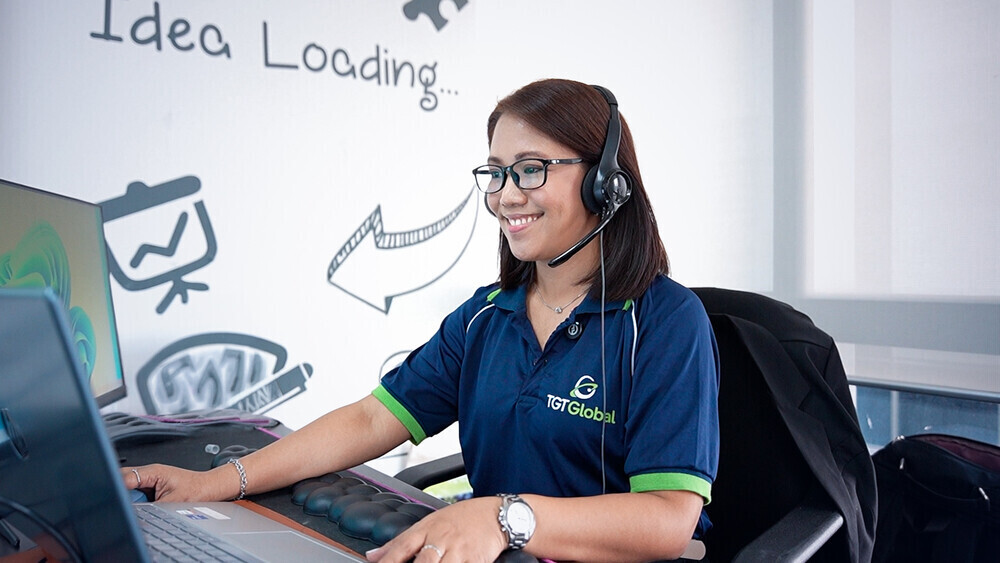
How we get started
Airish’s team starts by observing:
We do shadowing first. We sit side by side with our staff to check their current process, how they train, and how long it takes. Then we review all the materials, what’s in place, and analyze what can be removed, added, or made more effective.
We always start with getting the foundations right
One great example Airish discusses in the video … After sitting with a new partner’s staff, Airish’s team found what was missing: a shared vocabulary. So they added a glossary covering every technical and cultural term the company used, available to new hires from day one.
Have a process for keeping it up to date
Creating the knowledgebase is only half the job. Julie is clear that it has to move with the business.
Knowledgebases must be kept up to date, because issues change and approaches change. If there is a change in business direction, there should be a change in the knowledgebase too. Otherwise, people just keep doing the same thing, and that might not match where the company is heading now.
Documentation that falls behind just doesn’t get opened anymore.
Make sure people can find it
Julie gave an example from a security-related case with one partner:
We asked, is this in your knowledgebase? And the answer was, well, we don’t have that, but we told them in the team chat. Yes, that information exists somewhere. But if I’m handling the ticket, I must go through email to find it. If it’s in the knowledgebase, the person can just click it and follow the steps.
Getting help
TGT’s operations team and TGT Academy work with partners at any stage, whether they’re starting from scratch or improving what they already have.
“Whether you already have a knowledgebase in place or you’re planning to create one, we can help you build it together. You don’t need to be nervous about it. We have the operations team and the TGT Academy to guide you through it,” Airish said.
Julie added: “If you are a partner, you just need to talk to your operations manager. We are here to help you. We work together to help you. If you’re a prospective client, just let us know. We will guide you with the structure that we have and the experiences that we have. So, we are here for you.”
Watch the full interview above, or get in touch with TGT Global to talk about your knowledgebase.